



OBQC
OBQC is a semi-graphical QC tool for acoustic positioning.
It takes raw ranges and vessel positions from P294Reader and final solutions
from external files such as SPS. It reads and processes raw navigation data
from P294 files. Using the vessel positions and the raw acoustic ranges, it calculates residuals for each
pinger location and displays them graphically.
Multiple range files and multiple lines can be loaded at the
same time. It will allow multiple lines in a single run if necessary.
Ranges with residuals above a threshold are disabled (from
the RMS solution) and greyed out. Individual ranges can be enabled and
disabled. The image can be panned and zoomed to show close up detail.
Easting, northing, depth, line, station, calculated
crossline and inline values and RMS are displayed for the currently selected
pinger. These values can be shown against the stored solution (read from the
solution file) or an interactive solution. When the interactive solution is
enabled, the pinger can be dragged to any position and the quality of the
solution will change as it moves. A minimum RMS solution can be achieved this
way while viewing the resultant line and station number and inline and
crossline errors.
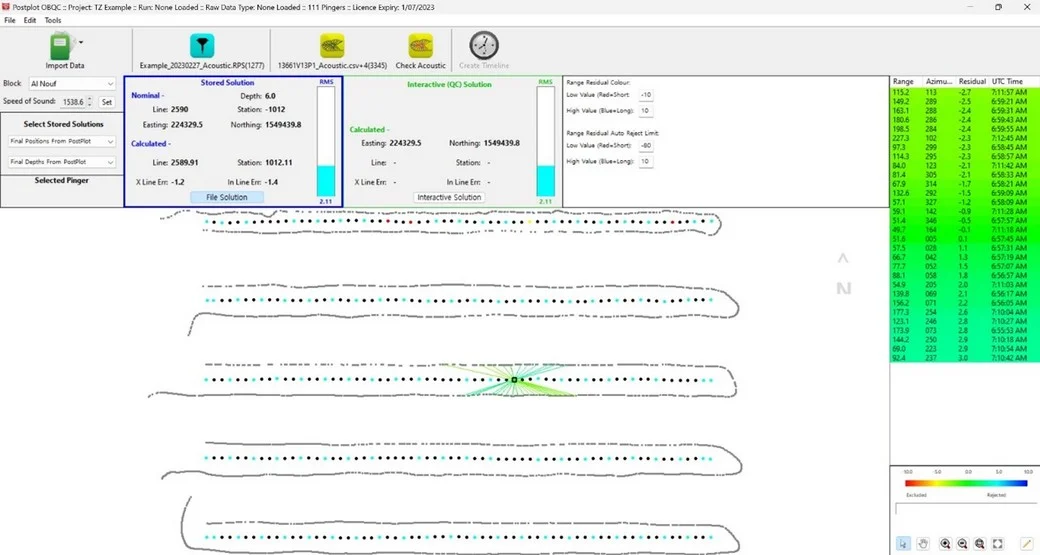
The image above shows OBQC with five acoustic runs of five
different lines loaded. This shows generally good data with only a few dead
pingers and most pingers having very good RMS. The selected pinger is showing
good RMS with no high residual ranges and no rejected ranges.
Like P294Reader, OBQC is now just used as a backup
application which can independently check output from other acoustic systems if
required. Gundog is now the main raw marine acoustic data processing application.